Case study
RunOlga
A business operating system for leadership teams, built first for the leadership at Geriatric Care Solution. Olga, its embedded assistant, answers from the organization's own data and proposes task breakdowns that a human approves before anything is written. RunOlga is a team project; the application was built by a teammate. My part was the product documentation site and its grounded Ask Olga assistant.
What it is
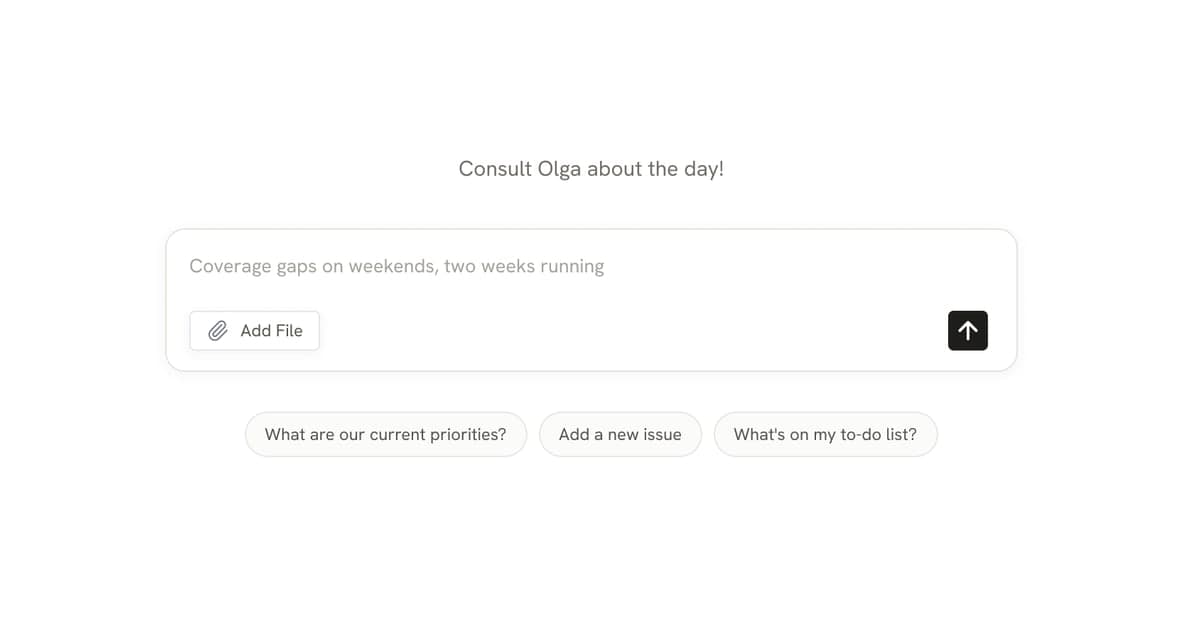
RunOlga gives a leadership team one place for its vision, accountability chart, weekly scorecard, priorities, issues, and a versioned process library with review dates. Olga sits inside it. She reads the organization through permission-scoped tools, cites what she found, and when a leader creates a priority she proposes a task breakdown that only becomes real once the leader approves it. That draft-then-approve shape is borrowed from the care plan and task decomposition flow in Anaya Care.
What I did
- The documentation site. RunOlga is built docs-first: the team agrees on how the product must behave in writing, then makes the system match. I set up the Fumadocs site that holds that spec, with search, its own deployment, and a structure the rest of the team has kept filling in since.
- Ask Olga. A grounded assistant for the docs, ported from the one I built for Anaya Care's own documentation. Every page is indexed section by section, the model is required to search before it answers, every answer links to the page it came from, and it is told to say so when the docs mark something as open or not yet built. It runs on the Vercel AI SDK with tool calling and streaming, and it fits in a panel that follows the reader around the site.